Selling templates or delivering solutions?
The difference isn't moral, it's structural: who does the remaining work? A template competes with “I'll build it myself,” a solution with “I'll hire someone” — and that changes both the price ceiling and the failure mode.

This question usually gets asked as if it were about values: selling templates is the lazy option, delivering solutions is the real work. It isn't. The difference between them is structural, not moral.
It sits in one place: who does the remaining work?
A template hands the rest of the job to the buyer. A solution keeps it with you. That one handover decision separates the price, the competition and the failure mode — all three at once.
They compete against different things
A template's competitor isn't another template. It's "I'll just build it myself."
That sets the price ceiling. At the moment of purchase the buyer is doing one calculation: how many hours would building this from scratch cost me? The template has to sell below that number. Price above it and the buyer chooses to build it themselves, usually wrongly.
A solution's competitor is "I'll hire someone." That threshold is far higher, so the price ceiling is higher too. But for the same reason the purchase decision is heavy: nobody hires a freelancer they don't know.
So: templates are low price, low friction. Solutions are high price, high friction. Which one is "better" depends entirely on which friction you can carry.
A template's real competitor is a screenshot
Templates have a problem that gets discussed less: the moment one works, it becomes copyable.
All of a template is visible. The buyer opens it, understands its structure, and can rebuild it if they want. Nothing prevents that, and nothing should — what the template sells is "you don't have to build it," not secrecy.
A solution isn't defended that way. Copying a solution is hard, because what would have to be copied isn't a file, it's ongoing work. But that's precisely why a solution has a ceiling: if what you're selling is your time, the quantity you can sell is fixed.
Templates scale but are undefended. Solutions are defended but don't scale. Sitting somewhere in the middle isn't a compromise, it's a third product: template plus support. That one comes with its own cost curve, and it's usually the most underestimated of the three.
The failure modes differ too
When a template sells, the job looks finished. What's invisible is this: the buyer may never use it. A file that was downloaded and never opened produces a customer who doesn't ask for a refund and never buys again. That's a silent failure — it doesn't show up in the sales number.
A solution's failure isn't silent. You fall behind, quality drops, the customer says so. Bad news arrives earlier.
Bad news arriving early beats bad news arriving late. That's the least-discussed advantage of the solution side.
Which side I'm on
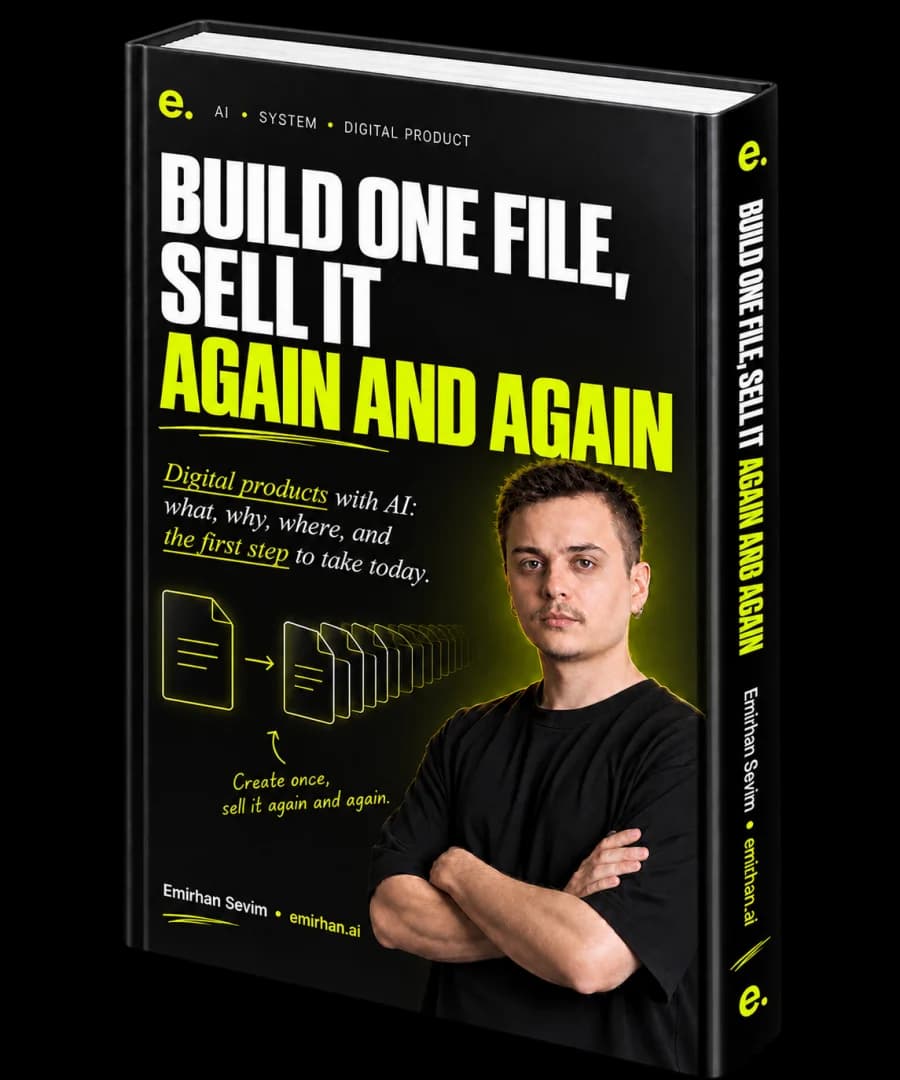
The only product on this site is on the template side: an ebook, downloadable, with the remaining work left to the reader.
And so far it has sold nothing. The orders table is empty and no payment provider has even been chosen — the resource is currently free, given in exchange for an email address.
So I'm not writing this to defend a side. I can see the cost of both, and I've tested neither. What's above isn't the result of an experiment. It's a frame for how the buying decision is built.
What I don't know
I don't know the "never used" rate for a template. I don't measure how many people download it and never open it, because measuring that would mean tracking whether the file gets opened, and I don't do that.
Something else is unresolved: I'm not sure this is two categories rather than one axis. Add support to a template and it drifts toward a solution; document a solution and it drifts toward a template. Maybe the question isn't "which one" but "which direction, one step, this month." I haven't built a way to test that yet.